
HOME BATTERY BACKUP

Confidence at home.
Control over your power.

A well-designed battery system does two jobs: it helps keep your home running during an outage, and gives you more say in when you use grid electricity.

Plan my battery system
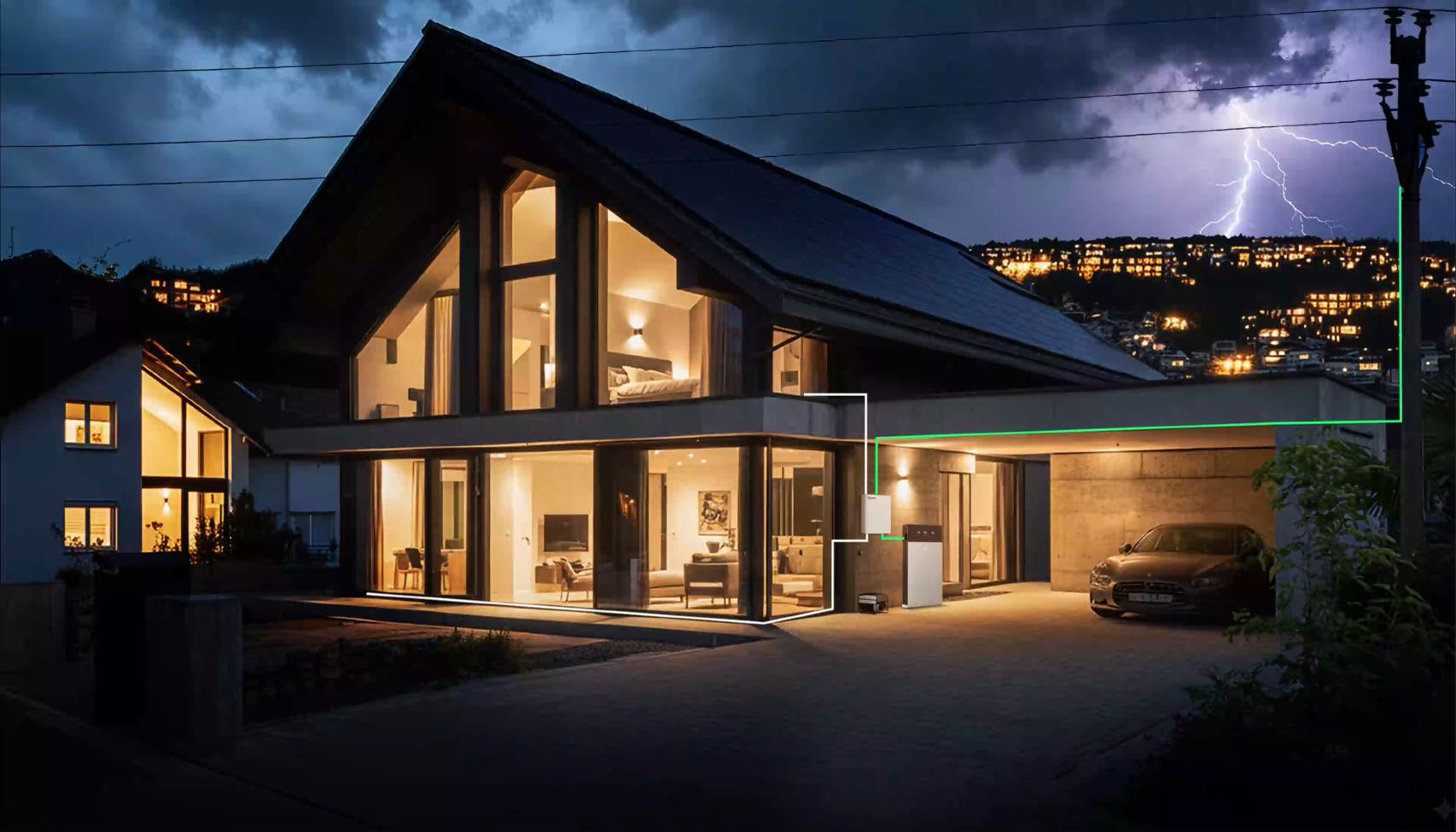
Hoymiles illustration of a home illuminated during a stormBackup begins with a plan for your home’s actual loads.

01 / BACKUP THAT MAKES SENSE

Keep what matters
running longer.

Start with your priorities. Refrigeration, lighting, internet and selected outlets may need far less energy than running heating, cooling and cooking together.

We review both power (kW), which determines how much can run at once, and energy (kWh), which determines how long stored power can last. Motor starting loads and your backup reserve matter, too.

Runtime is specific to your home. Weather, battery state of charge, equipment losses and load choices all affect the result.

02 / A COMPLETE HOME SYSTEM

Whole-home backup,
thoughtfully sized.

Our complete HiONE kits include the HMID backup interface: choose one 9.6 kW inverter with 24 kWh of batteries, or two 9.6 kW inverters with 48 kWh for a larger home. Both packages include one HMID and are on sale at 13.1% off regular retail.

See complete kit prices

What we work through with you

  • Which circuits and appliances should stay on
  • Simultaneous loads and motor startup requirements
  • Battery capacity and your target backup duration
  • Service connection, backup interface and load management
  • Installation responsibilities, permits and commissioning

Whole-home connection does not mean every appliance can run simultaneously or indefinitely. Final design sets the operating limits.

03 / PUT STORED ENERGY TO WORK

Peak shaving and
time-of-use savings.

Your utility bill tells us which strategy
makes sense for your home.

Peak demand shaving

A battery can supply part of a short, high-demand period, reducing the power drawn from the grid. This can reduce demand charges when your tariff includes them.

If your bill has no demand charge, shaving demand alone may not lower the bill.

Time-of-use shifting

Where your tariff permits, store electricity during lower-cost hours and discharge during higher-cost hours. Keep a reserve for outages while managing daily use.

Savings depend on the rate spread, charging rules, conversion losses, battery use and your household’s schedule.

OFF-PEAKCharge strategically

Store energy when it makes sense.

PEAK HOURSUse stored power

Reduce grid draw during costly periods.

ALL DAYKeep a backup reserve

Balance daily savings with resilience.

Illustrative strategy, not a forecast. Your available operating modes and savings are confirmed during system design.

GOOD QUESTIONS

Start with clarity.

Do I need new solar panels?
A battery project can start with backup and energy management. Tell us whether you have existing solar, want grid charging, or may add generation later. We’ll confirm the supported equipment configuration and utility requirements.
Can a battery run my air conditioner or well pump?
Possibly, with the right design. We need the equipment’s running load and starting requirements, plus the other loads you want to run. Inverter capability and the number of battery modules both matter.
Can I install part of the system myself?
HiONE’s modular design simplifies assembly. We can help define a DIY-assisted scope, while electrical connections, permitting and commissioning must follow the manufacturer’s instructions and local requirements.
Will a battery pay for itself?
There is no one-size-fits-all answer. Backup has practical value, while financial savings depend on your tariff, consumption and system cost. Bring a recent utility bill so we can discuss the options without promising a fixed return.

YOUR NEXT STEP

Let’s put your home in charge.

Tell us what you want to keep running, how long you need backup, and what matters most. We’ll help you choose a complete system that fits.